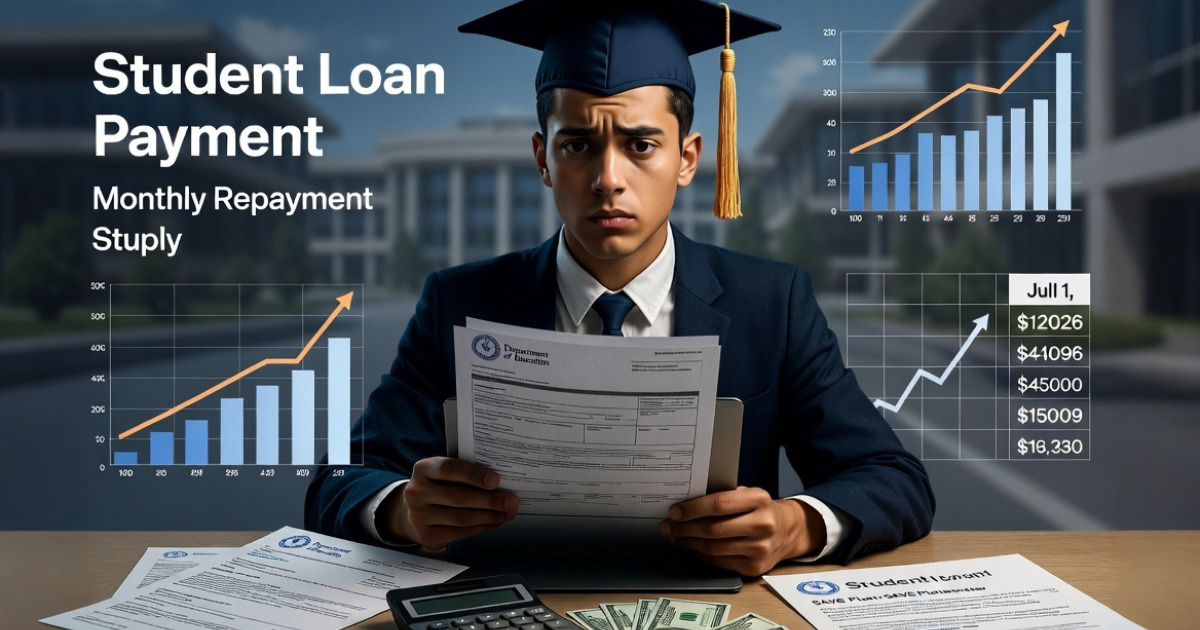
Millions of federal student loan borrowers in the United States are preparing for a major change as the SAVE (Saving on a Valuable Education) Repayment Plan comes to an end. Beginning July 1, 2026, loan servicers will start contacting more than 7 million borrowers, asking them to choose a new repayment option.
The transition could significantly affect monthly loan payments for many borrowers. Depending on income and family size, some borrowers may see their monthly bills increase by several hundred dollars. Before selecting a new repayment plan, it is important to understand the available options, eligibility requirements, and common mistakes that could cost borrowers more money in the long run.
Student Loan SAVE Plan: Key Highlights
| Particular | Details |
| Program Affected | SAVE (Saving on a Valuable Education) Repayment Plan |
| Effective Date | July 1, 2026 |
| Borrowers Impacted | More than 7 million federal student loan borrowers |
| Main Change | Borrowers must switch to another repayment plan |
| Possible Impact | Higher monthly loan payments for many borrowers |
| Recommendation | Compare all repayment plans before making a decision |
Estimated Monthly Payment Comparison
| Borrower Example | Under SAVE Plan | Under Income-Based Repayment (IBR) |
| Family of four earning $120,000 annually with $60,000 in student loans | Around $430/month | Approximately $630–$850/month |
Which Repayment Plan Should You Choose?
Choosing the right repayment plan depends on your financial goals and eligibility. Experts recommend looking beyond the lowest monthly payment and instead considering the total amount you will pay over the life of the loan.
If you expect to repay your loan in full, paying a higher affordable monthly amount can reduce overall interest costs and help you become debt-free sooner.
However, borrowers who qualify for Public Service Loan Forgiveness (PSLF) or another income-driven forgiveness program should generally select the repayment plan with the lowest qualifying monthly payment.
Read more: CBSE’s Big Update! Class 7–9 Students Can Continue Their Existing Foreign Language Combination Until Class 10
How to Find the Best Repayment Plan
| Step | What You Should Do |
| Step 1 | Determine whether you qualify for loan forgiveness programs. |
| Step 2 | Find out when you received your first federal student loan. |
| Step 3 | Compare repayment plans using official online calculators. |
| Step 4 | Select the plan that best matches your financial situation. |
Helpful Online Tools
Borrowers can compare repayment options using the following resources:
- Federal Student Aid Loan Simulator
- The Institute of Student Loan Advisors (TISLA) Repayment Calculator
These tools can provide estimates based on your income, loan balance, and repayment goals. However, actual payment amounts may vary after your application is processed.
When Will the New Payments Begin?
| Process | Expected Timeline |
| Submit a repayment plan request | Any time after notification |
| Processing Time | A few days to several weeks |
| Disclosure Period | Around 30–45 days |
| First Payment Due | After the disclosure period ends |
Common Mistakes Borrowers Should Avoid
One of the biggest mistakes borrowers make is believing misleading information shared online. Financial experts warn that loan consolidation does not automatically make borrowers eligible for additional repayment plans.
Borrowers who are already working toward loan forgiveness should also be cautious. Consolidating certain loans could reset forgiveness progress in some situations, making it harder to qualify for future debt cancellation.
Experts also advise borrowers not to ignore their student loans. Missing payments can lead to loan default, wage garnishment, collection fees, and serious damage to credit scores.
What If You Can’t Afford the New Payment?
If the new monthly payment feels unaffordable, experts recommend making the lowest payment you can instead of missing payments completely.
Borrowers may also consider:
- Looking for additional income sources.
- Reducing unnecessary monthly expenses.
- Reviewing repayment options every year.
- Updating income information if financial circumstances change.
Taking action early can help borrowers avoid default and protect their financial future.
Why Reviewing Your Repayment Plan Every Year Is Important
Financial advisors recommend reviewing your repayment plan annually, especially if your income changes. Many borrowers choose a repayment option once and never update it, which can result in paying significantly more interest over time.
Reassessing your repayment strategy each year ensures that you remain on the most suitable plan and may help reduce your overall borrowing costs.
Conclusion
The end of the SAVE Plan marks a significant change for millions of federal student loan borrowers across the United States. As borrowers begin receiving notices from loan servicers, understanding repayment options and choosing the right plan will be more important than ever.
Before making a decision, compare all available repayment plans, verify your eligibility for loan forgiveness programs, and avoid relying on misinformation shared online. Taking the time to review your options today could save you thousands of dollars over the life of your student loan.
Frequently Asked Questions (FAQs)
1. When will borrowers start switching from the SAVE Plan?
Loan servicers will begin contacting borrowers starting July 1, 2026.
2. How many borrowers are affected?
More than 7 million federal student loan borrowers are expected to transition from the SAVE Plan.
3. Will monthly payments increase?
Yes. Many borrowers may see their monthly payments increase depending on their income and the repayment plan they choose.
4. Should I consolidate my student loans?
Not necessarily. Experts recommend understanding the consequences before consolidating, as it may affect repayment options or forgiveness progress.
5. How can I compare repayment plans?
Borrowers can use the Federal Student Aid Loan Simulator and The Institute of Student Loan Advisors (TISLA) calculator to estimate repayment options.
6. What happens if I stop making payments?
Defaulting on a federal student loan may result in wage garnishment, collection fees, and damage to your credit score.